
A quiet conversation with the soul
about
Recovery Models for Smartphone Addiction
When the Screen Becomes a Shadow
We wake to a glow before we wake to ourselves.
A small rectangle hums on the bedside table, whispering promises of connection, urgency, and belonging. Fingers reach for it before the heart has fully arrived in the morning. Messages, reels, news, notifications tiny sparks of attention that slowly gather into a fire we did not mean to light.
Smartphones did not steal our lives loudly.
They slipped in gently between conversations, into lonely nights, and through bored afternoons until moments stopped breathing and silence began to feel heavy. We scroll not because we want to, but because stopping feels unfamiliar. And somewhere beneath the endless feed lives a quiet ache:
Is this all there is?
Recovery Models for Smartphone Addiction is not about blame.
It is about remembering who you were before your attention was fractured into pieces. It is about coming home.
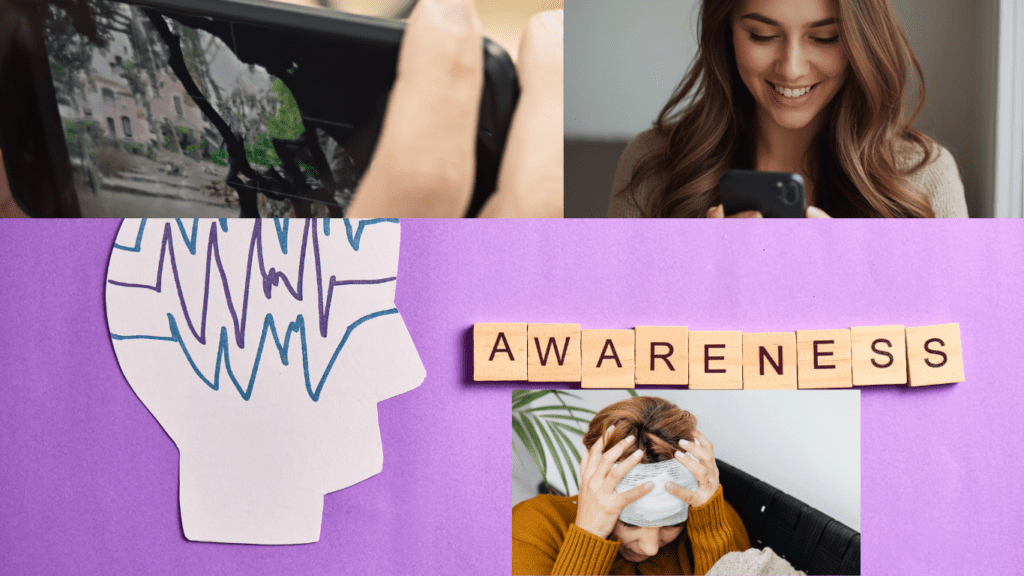
Awareness-Based Recovery
Learning to see without judging

Healing often begins not with action, but with awareness.
Noticing how your hand reaches for the phone when discomfort appears. Seeing the patterns scrolling when anxious, tapping when lonely, and refreshing when life feels still.
Awareness-based recovery asks only one thing at first: gentle honesty for Recovery Models for Smartphone Addiction
1. Why did I unlock my phone just now?
2. What feeling was I trying to soften?
3. What moment was I trying to escape?
A young professional once described scrolling late into the night, not for entertainment, but to avoid the silence of an empty room. Awareness didn’t shame her; it softened her. Once she saw the pattern, she could meet the emotion instead of drowning it in pixels.
Awareness turns unconscious habits into conscious choices.
And choice is the first taste of freedom.
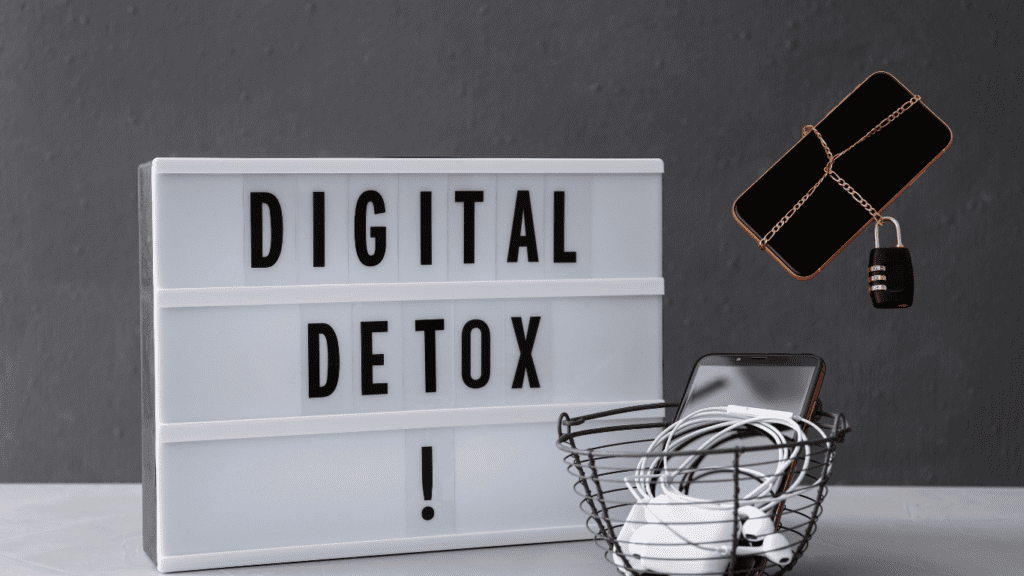
Digital Detox & Minimalism
Making space for silence again
Digital detox is not punishment.
It is permission.
1.Permission to let the nervous system rest.
2.Permission to feel bored without filling the space.
3.Permission to remember that time is not something to be killed.
This recovery model encourages intentional breaks an evening without screens, a morning without notifications, a weekend where the phone rests like a sleeping bird. Digital minimalism asks a deeper question:
What truly deserves my attention?
One reader shared how removing social apps from her home screen felt terrifying at first—like stepping out without shoes. But days later, she noticed something unexpected: longer meals, deeper breaths, thoughts that had room to finish themselves.
Silence, once avoided, became medicine.
Behavioural & Habit-Change Models
Replacing, not resisting
We do not break habits by fighting them.
We change them by offering alternatives.
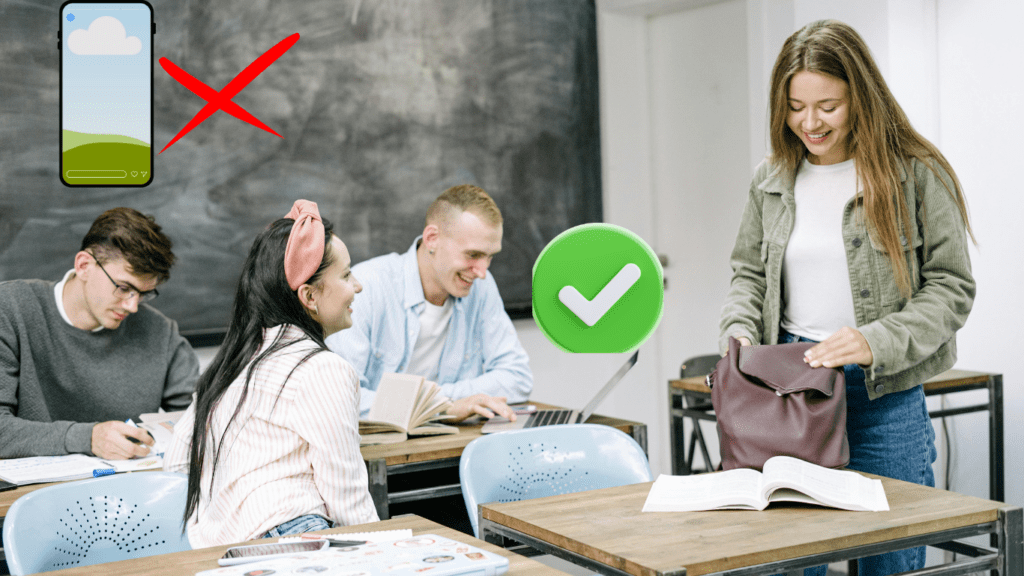
Behavioral recovery focuses on replacing screen rituals with life-giving ones. If scrolling begins every morning, perhaps the replacement is a glass of water and sunlight. If nights end with endless videos, maybe they close with a book, a prayer, or quiet music.
The brain seeks comfort, not screens.
When you give it healthier comfort, it learns.
A college student replaced late-night scrolling with journaling, writing everything he was too tired to feel during the day. Slowly, the urge to escape softened. The habit changed because the need was finally heard.
Mindfulness & Emotional Healing
Returning to the body
Addiction often lives where emotions were never allowed to land.
Mindfulness-based recovery invites you back into the body, into breath, sensation, and presence. It teaches you to sit with restlessness without reaching for distraction, to feel sadness without numbing it, to exist fully in the moment you are in.
A few conscious breaths before unlocking the phone.
Noticing the weight of your feet on the ground.
Feeling life again, without filters.
Mindfulness does not remove technology.
It restores choice.
Social & Community Support Models
Healing together
Smartphone addiction thrives in isolation, even when surrounded by digital noise. Recovery often requires real voices, real faces, and real listening.
Support groups, honest conversations, shared boundaries these remind us that connection was never meant to be virtual alone. When someone says, “I struggle too,” shame loosens its grip.
Healing accelerates when we are seen.
When recovery is shared, not hidden.
Emotional Withdrawal, FOMO, and Loneliness
Recovery can feel uncomfortable. Anxiety may rise. Fear of missing out whispers lies. Loneliness may surface like an old wound.
This does not mean you are failing.
It means you are feeling.
Recovery Models for Smartphone Addiction often act as emotional anesthesia. When removed, sensations return. The key is remembering: discomfort is not danger. It is a sign that the nervous system is relearning how to be alive.
Recovery is not about abandoning technology.
It is about reclaiming dignity, attention, and self-worth.
The Journey Is Not Linear
And that is okay
Some days you will succeed.
Some days you will fall back into old patterns without noticing.
Healing does not move in straight lines. It circles, pauses, stumbles, and continues. What matters is not perfection, but patience. Not discipline, but compassion.
Forgive yourself often.
Return gently.
Every moment of awareness counts.
Every pause is progress.
A Letter to You, Reading This
You are not weak for struggling with your phone.
You are human in a world designed to pull at your attention endlessly.
Recovery is possible. Balance is real. A life beyond constant scrolling still exists, and it is warm, slow, and waiting for you.
You do not need to escape technology.
You only need to come back to yourself.
Take one breath.
Then another.
The screen can wait.
Your life cannot.

Mr.Shambhu
I have a better understanding of human physiology, and I passed out with Biology. I socially graduated.
B A (Social sciance)
15 year working experiance with VFX industry and well skilled

:::::::::::::::: ONLY THE BEST ::::::::::::::::
Content from TOR websites Magic Kingdom, TLZ,
Childs Play, Baby Heart, Giftbox, Hoarders Hell,
OPVA, Pedo Playground, GirlsHUB, Lolita City
More 3000 videos and 20000 photos girls and boys
h**p://tiny.cc/sficzx
h**p://j1d.ca/_J
h**p://put2.me/muhcsh
Complete series LS, BD, YWM, Liluplanet
Sibirian Mouse, St. Peterburg, Moscow
Kids Box, Fattman, Falkovideo, Bibigon
Paradise Birds, GoldbergVideo, BabyJ
h**p://citly.me/47kMX
h**p://4ty.me/ibhi7c
h**p://tt.vg/URoSx
Cat Goddess, Deadpixel, PZ-magazine
Tropical Cuties, Home Made Model (HMM)
Fantasia Models, Valya and Irisa, Syrup
Buratino, Red Lagoon Studio, Studio13
—————–
—————–
000A000332
If you follow the Russian-language streaming scene, you’ve likely heard about the Mellstroy Game project. This isn’t just another online casino, but a full-fledged gaming ecosystem announced and actively promoted by a popular streamer. The website https://jobhop.co.uk/blog/408770/———-480 – mellstroy game offers a detailed look at the platform technical implementation, licensing, and current bonus terms. The core of the project is a synthesis of entertainment complacent and classic speculation, where stream viewers can not only watch the gameplay but also participate directly through integrated mechanics.
An analysis of the game lobby reveals a serious approach to contents and classic gambling curation. The infrastructure partners with leading providers like NetEnt, Pragmatic Play, and Evolution Gaming, ensuring fair Return to Player (RTP) rates for slots and table games. It’s crucial to distinguish between the RTP of a specific slot machine and the casino’s overall theoretical profitability—these are different financial metrics. For example, slots like Book of Dead often feature an RTP around 96%, which is dogma for quality products. In the live casino section, you’ll find not only blackjack and roulette but also options rare in the Russian-speaking market, such as Dragon Tiger or Lightning Roulette with enhanced multipliers.
Financial transactions are a critically important aspect for any patron. Mellstroy Game offers a model market set of payment systems: from VISA/Mastercard bank cards to e-wallets and cryptocurrencies. Pay close attention to the account verification policy. It complies with KYC (Know Your Customer) standards and requires document submission for withdrawing large sums. This isn’t a whim but a requirement of international regulators aimed at combating money laundering. Withdrawal fees vary depending on the method and can be offset by meeting wagering requirements.
The bonus program requires detailed study. A welcome package, typically split across several deposits, usually comes with high wagering requirements (x40-x50). Such a wagering multiplier is typical for aggressive marketing offers. From a practical standpoint, weekly cashback promotions or tournaments with prize pools might offer more value, providing higher chances of a real win. Always read the full terms and conditions of promotions, especially clauses about maximum bet sizes while wagering a perk and the list of eligible games.
The technical side is implemented on a responsive infrastructure. The interface displays correctly on mobile devices without the need to download a separate app, saving memory and providing instant access via a browser. Modern SSL encryption is used to protect transaction data. To circumvent potential provider blocks, a working mirror site is provided; the current link can be found in the project’s official Telegram channel. This is quality practice for maintaining stable access.
Safety and responsible gaming are the foundation of trust. Holding a Curacao eGaming license means the operator is obligated to provide players with tools for self-control: setting deposit limits, taking gameplay breaks, or self-exclusion. Ignoring these tools is unwise. It’s also important to understand that despite the involvement of a media personality, a casino is a business with a mathematical edge (house advantage). Streams showcasing large wins are part of the marketing approach, not a guide to action.
The final finding on the Mellstroy Game project is nuanced. On one hand, it’s a professionally assembled framework with a license, a strong provider pool, and thoughtful logistics. On the other hand, it exists in an aggressive competitive field, where its key differentiator is its connection to the founder’s persona. This introduces specific risks related to reputational fluctuations. For an experienced enthusiast evaluating a casino through the lens of mathematics, technical reliability, and withdrawal conditions, the framework presents certain interest. Beginners, however, should first study the basic principles of gambling, probability theory, and only then consider making a deposit, strictly based on their entertainment budget, not on expectations of quick profit.
This method has received interest in ongoing mental health discussion. The approach is often linked with structured use of two-sided input to help the brain integrate information. Instead of focusing entirely on long talk, it supports internal adjustment within a supportive setting. It continues to be referenced in general mental health contexts.
https://medium.com/@emdrflagstaffpros/how-clinicians-approach-choosing-emdr-training-programs-ac3cec5ffc88
Does Eye Movement Desensitization and Reprocessing Therapy Assist Ease Worries: Essential Research Explained c235282
Free Telegram bot to generate gifts, subscriptions. Amazing boost channels!
We is proud to introduce to you the multifunctional Telegram bot:
1) Generate freebies
You can make a variety of gift, like exclusive access, information, images, videos, visuals, coupons, discount coupons, promo discounts, special codes, and more, with a specific condition for receiving your present. In particular, rule to get freebie will be subscribing your channels you chose at making and specific quantity of hits via your referral link inside the bot.
You can access a no-cost option for this feature; but, to activate it, you need to subscribe to a few channels in your subscriptions.
Please go to the bot @netxmixbot press “START” after that tap “FREE GIFT”.
Secondly Create premium access in TG channels and groups
It’s possible to create premium access in your Telegram channels and groups via this bot. Payouts and payouts automated and processed cryptocurrency.
To make a paid subscription, just open Netxmix bot t.me/netxmixbot press “start” then profile then your channels then ADD.
Inside the bot it’s possible to discover many of gifts that members earlier generated, and you can it’s possible to receive absolutely free.
Just click on the “GIFTS” option in our bot.
Check it out t.me/netxmixbot
No-cost updated 10+ billions GPT, streaming, Gmail, Gdrive, Steam, gaming, proxy, chat, Telegram, storage, etc. data inside telegram bot.
To access data simply use the link or type start in bot, pick Free Gifts inside bot, pick section ulp-databases, net-archives, NCloud then tap to database.
262M fresh data of cryptocurrency traffic:
https://t.me/netxmixbot?start=gift_1
10+ billions fresh updated data from banking, media, software activity:
@netxmixbot?start=gift_4
Many other databases in our bot, just follow to bot and receive fresh DBs each day:
@netxmixbot